One of my favorite fruits when perusing through the produce aisles is pineapple. Its funky almost pinecone-like shape and its sharp, rigid leaves belie the delectably sweet yet acidic golden pulp. After finally getting it home, the smell that wafts up from the cutting board elicits images of tropical salsa on chips and refreshing pina coladas while sitting on a warm beach. With my mouth watering watching freshly cut pieces falling from my knife, it takes almost all my willpower to make it to the end of prep to put a piece in my mouth. The wait has never been fruitless; that first piece that I get into my mouth burst with that far-away loved flavor, the juicy pieces instantly putting a smile on my face as I grab another and another. Soon though, I can feel my mouth getting sore, almost like I’ve been eating something incredibly hot or a very sour candy. The more pineapple pieces that I eat, the more intense this feeling becomes. What is causing this? How can something that smells and taste so sweet create a raw feeling like this in my mouth? The answer lies in an enzyme that is found in the pineapple, both in stem and the fruit: bromelain.
Bromelain is a group of active enzymes that is found in the pineapple plant’s fruit and stem. These enzymes assist in the breakdown of the proteins at their amino acid bonds. Depending on the protease that the enzyme may have, it breaks down the proteins at different parts of the amino acid chain. Serine (or the RNA structure AGU/UCG), cysteine (UGU/UGC), or threonine (ACU/ACC) are examples of some of the amino acids that are in a protein chain. Bromelain is a cysteine protease in particular, so wherever the amino acid chain contains a cysteine structure, bromelain will come in and conduct a proteolytical process.
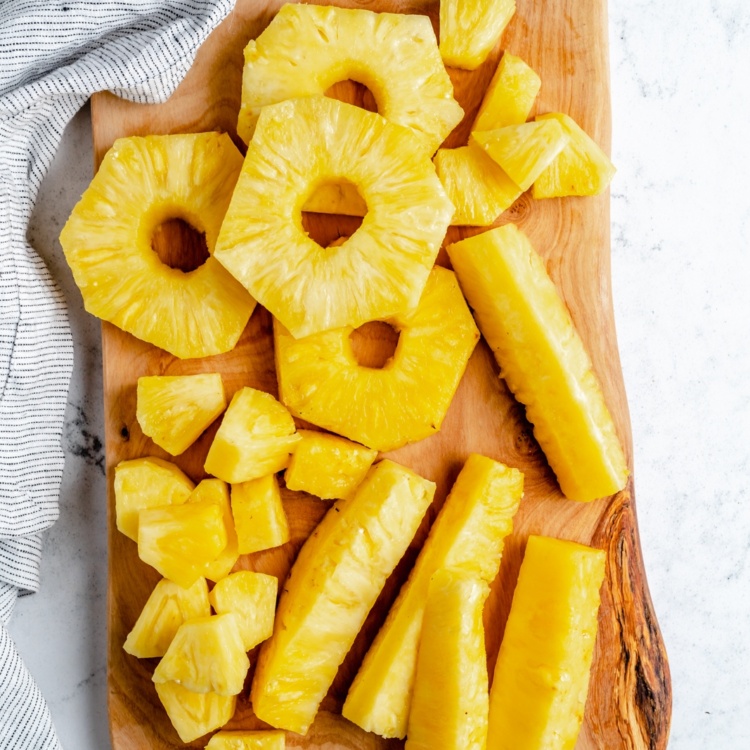
A metric that should be noted of the bromelain that is in the fruit versus the bromelain in the stem is that fruit bromelain contains 90% of the “proteolytically active” material in the pineapple, meaning that the fruit of the pineapple contains 90% of the enzyme that feels like it is slowly dissolving your mouth (or tenderizing the proteins you may place in it). A protease, from proteolytic, is a “cleaver” of peptide bonds, which is also known as a process called hydrolysis. Hydrolysis is the breakdown of a water molecule into two parts, a positive H+ ion and a negative OH- group. In this particular reaction, the breakdown of the proteins is called proteolysis. In our bodies, we undergo proteolysis when we eat various protein sources, where we break down our foods into the amino acids that create them and then rebuild those amino acids into protein structures within our bodies. In the case of bromelain, it is accelerating in the breakdown of the protein in its vicinity, our mouths. This is why we begin to feel sore after eating a couple cups of pineapple. The bromelain is breaking the proteins or peptide bonds into the amino acids that, if coming from the foods that we are eating, we can create new proteins for the body to use.
***You may think this would exist in every iteration of pineapple in various dishes, but proteins have a tendency to denature (or breakdown) under heat. Most enzymes denature at around 55 degrees Celsius, or 130 degrees Fahrenheit. Bromelain denatures at 158 degrees Fahrenheit, which is slightly below the recommended consumer cooking temperature for eggs, rabbit, or red meat cooked at medium (160F). This explains why cooked pineapple is sweet without so much of the bite that comes from the freshly cut pieces***

Bromelain is a enzyme that is not at the fore front of everyone’s mind, but does play a crucial role in a meat/protein tenderizer for many recipes. When you look at a meat tenderizer like McCormick in the grocery store, bromelain is the hidden wonder in that powder boosting the tenderizing power. So, whenever you are enjoying the slice of pineapple on your pina colada and feel like small bite back, hopefully you give bromelain a brief bit of appreciation during your vacation.
 Karman Kitchen